Comparing New Development vs Resale in Downtown Manhattan
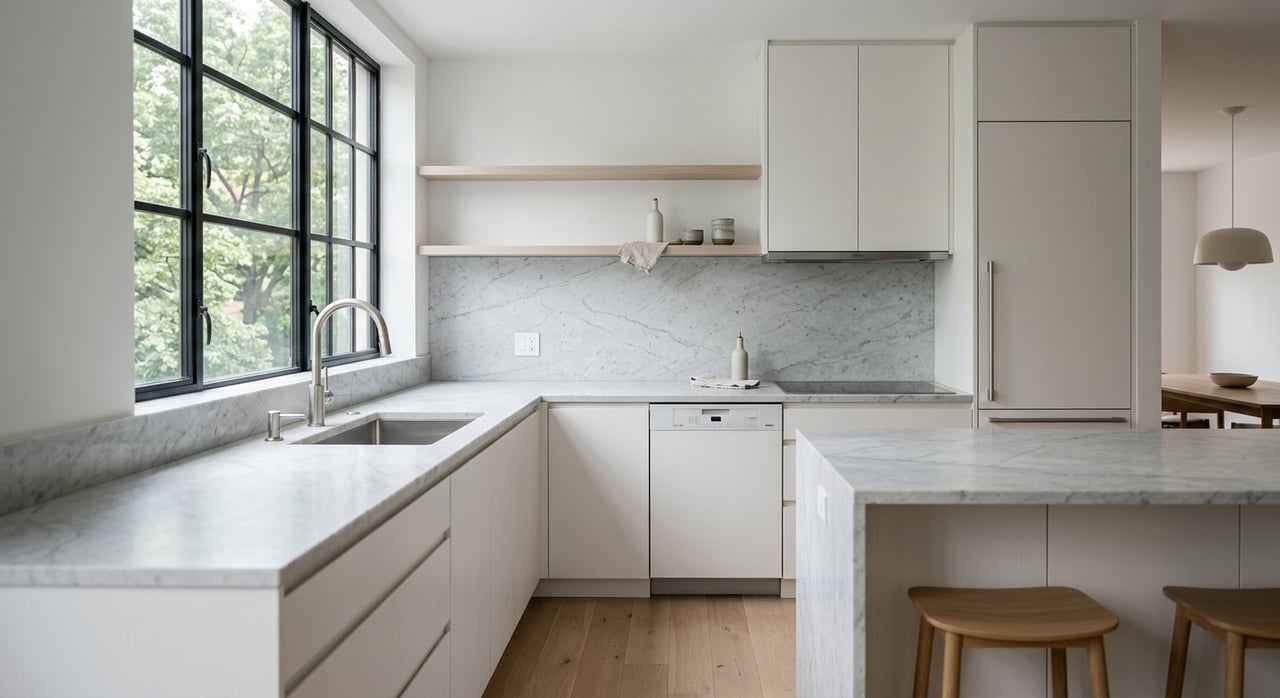
If you are weighing new development vs. resale in Lower Manhattan, you are not alone. Downtown buyers often face a real tradeoff between polished new finishes and amenities on one side, and faster timelines plus a clearer building track record on the other. The right answer depends on how you plan to live, how quickly you need to move, and how much uncertainty you are willing to accept. Let’s dive in.
Before you compare building types, it helps to understand that Downtown Manhattan covers several distinct submarkets. Recent Manhattan reporting separates the area into Downtown from 34th Street to 14th Street and the area south of 14th Street, which includes much of Lower Manhattan.
In Q2 2025, resale condos averaged $1,754 per square foot in Downtown and $1,860 per square foot south of 14th Street. Co-op pricing also varied, with south of 14th Street averaging $364,403 per room for prewar co-ops and $323,948 per room for postwar co-ops. That spread matters because a Tribeca condo, a Financial District condo, and a classic co-op can each present very different value.
Buyer demand has remained active as well. In late 2025, contract activity rose year over year in Downtown, and the Financial District posted especially strong gains, with much of that activity happening under $3 million. In other words, both resale and new-development homes are attracting buyers in Lower Manhattan.
New-development condos often attract buyers who want a more turnkey experience. You may get a never-lived-in residence, a layout designed for current buyer preferences, newer finishes, and a broader amenity package than many older buildings offer.
That premium can show up clearly in pricing. Recent Downtown examples illustrate the range: 108 Leonard in Tribeca showed available homes starting at $1.395 million with an average last-ask price of $2,531 per square foot, while The Greenwich in the Financial District showed available homes starting at $1.11 million with an average last-ask price of $1,909 per square foot.
For some buyers, that premium is worth it. If you value features like newer systems, contemporary interiors, shared amenity spaces, and a more polished move-in experience, new development may feel simpler and more aligned with your lifestyle.
A newly built condo can reduce some of the immediate maintenance unknowns that come with older properties. You are usually buying into a building with new major systems and a product designed to compete with current market expectations.
That can be especially appealing if you split time between cities, want a Manhattan base with minimal upfront work, or prefer a residence that feels current from day one. For busy or international buyers, that ease can be a meaningful advantage.
At the same time, new development requires disciplined due diligence. In New York, new construction is governed by the offering plan, and buyers should rely on that document rather than renderings or verbal descriptions.
The offering plan should spell out details about appliances, common areas, and warranty-related terms. If a feature or finish matters to you, it should be confirmed in the formal documentation. This is one of the biggest differences between buying a projected product and buying a home you can inspect as it stands today.
Resale remains compelling in Lower Manhattan because it gives you something new development cannot always provide: a real building history. You can review how the property operates, how the common areas actually look, and whether the home itself is truly turnkey or in need of work.
That can bring more clarity to your decision. Instead of relying on what a building is expected to become, you can evaluate what it is now.
For many buyers, that lowers uncertainty. If your priority is speed, predictability, or seeing the exact apartment before you commit, resale often has the edge.
In general, resale is the faster path because the apartment already exists and is not waiting on construction completion. If your move has a firm deadline, that timing advantage can be hard to ignore.
This matters in Lower Manhattan, where buyers may be relocating for work, returning to the city, or coordinating around lease endings and travel schedules. In those cases, a completed resale apartment may fit your timeline better than a sponsor unit that has not reached closing yet.
Resale is not automatically simpler. Existing buildings can come with repair or capital-project risk, and New York guidance specifically highlights areas such as facades, roofs, elevators, plumbing, boilers, and electrical systems as issues worth close review.
You also need to evaluate the apartment’s actual condition. A resale home might be beautifully renovated and truly move-in ready, or it might need updates that affect both your budget and your timeline.
For that reason, buyers should look closely at building financial statements, board minutes, and violation history. In a resale purchase, the facts on paper and the physical condition of the property matter more than the marketing story.
One of the clearest differences between new development and resale is the closing timeline. If you need certainty, resale often provides more of it.
With new development, contract signing and occupancy are not always close together. New York guidance notes that the first closing in a newly constructed condominium must occur within 12 months of the projected first-closing date, but sponsors can amend projected dates, and later closings may happen months or even years after that.
That does not mean new development is the wrong choice. It does mean you should go in with realistic expectations about timing. If immediate occupancy is important, you should ask very direct questions about readiness, projected closings, and whether the residence is sponsor inventory, part of a conversion, or a true resale.
In Lower Manhattan, your purchase price is only part of the equation. Monthly carrying costs, taxes, and closing costs can change how attractive a property feels once you look beyond the list price.
In New York City, co-ops and condos fall into tax class 2. For fiscal year 2025/26, the class 2 tax rate is 12.439 percent, and the city values co-op and condo buildings using comparable rental buildings. The city also notes that assessments can take time to catch up to market value.
If you are looking at co-ops in Lower Manhattan, the building receives the tax bill and allocates that cost through maintenance or common charges. Individual co-op owners do not receive a separate city tax bill directly.
Condo ownership looks different. Condo common charges cover building operations, while the unit owner is generally responsible for the unit-level property tax bill if it is not being paid through a lender or servicer.
That distinction matters when you compare a resale co-op, a resale condo, and a new-development condo. Two homes with similar asking prices can feel very different once you map out the monthly ownership picture.
Some buyers expect a new-development condo to come with a long tax benefit. In practice, you should verify the tax status of each building individually.
The co-op and condo tax abatement can reduce property taxes by 17.5 percent to 28.1 percent, but eligibility is limited and tied to factors including primary residency. Separately, current 421-a rules apply only to certain projects that started construction within a defined period and met filing requirements. The key takeaway is simple: do not assume every Lower Manhattan new development comes with a meaningful abatement.
Closing costs are another reason the new development versus resale decision is not only about aesthetics. In New York State, there is a real estate transfer tax of $2 per $500 of consideration, and the mansion tax applies at 1 percent on residential purchases of $1 million or more.
New York City also imposes an additional base tax and a supplemental tax on higher-priced transfers. In general, the seller pays the base transfer tax, while the buyer pays the mansion tax and supplemental tax. If you are financing, mortgage recording tax may also apply when the mortgage is recorded.
These costs can materially affect your cash needed at closing. That is why smart buyers compare the full ownership picture, not just the contract price.
When clients compare new development and resale in Lower Manhattan, the best choice usually comes down to priorities rather than headlines. A newer building may look more effortless, but a resale apartment may offer more certainty and a clearer value story.
A practical way to think about it is this:
In a place as nuanced as Lower Manhattan, the most effective strategy is not to ask which category is better in the abstract. It is to ask which property best matches your timing, risk tolerance, and long-term plans.
Whether you are targeting a polished new condo in the Financial District or a resale opportunity elsewhere in Downtown, careful guidance can help you compare the tradeoffs clearly and move with confidence. If you are considering your next purchase in Lower Manhattan, Maison International Team can help you evaluate new development and resale options with a discreet, tailored approach.
Stay up to date on the latest real estate trends.
August 20, 2026
August 13, 2026
August 6, 2026

July 23, 2026

July 16, 2026
July 16, 2026
July 9, 2026
July 9, 2026

July 9, 2026
The Maison International Team truly believes in the magic of finding the perfect real estate partners. Their long history of working with a diverse range of clients from all over the world has knit a rich tapestry of prized friendships and business relationships. They consider each day to be another opportunity to weave new threads and continue their legacy of client-focused real estate success.